
Screen-Free Activities for My Child
Toddlers around 18 months of age are constantly moving, exploring, and testing boundaries. At this stage, their brains are developing rapidly, and their bodies are learning to follow.
But how do you keep a 1.5-year-old engaged at home without relying on screens?
Here are four developmentally appropriate, screen-free activities that are easy to set up and powerful for your child’s brain and body.
1. Water Play at the Table: Calm, Focused Engagement
Water is naturally soothing for toddlers. Set up a low tray or shallow bowl with some water and offer simple tools like plastic cups, ladles, or measuring spoons. Add toys like floating toys, lemon slices, or flower petals.
Always supervise closely. Ensure that you lay a towel or mat underneath to manage spills.
Add words like: “Let’s pour,” “It’s full,” “Splash!”
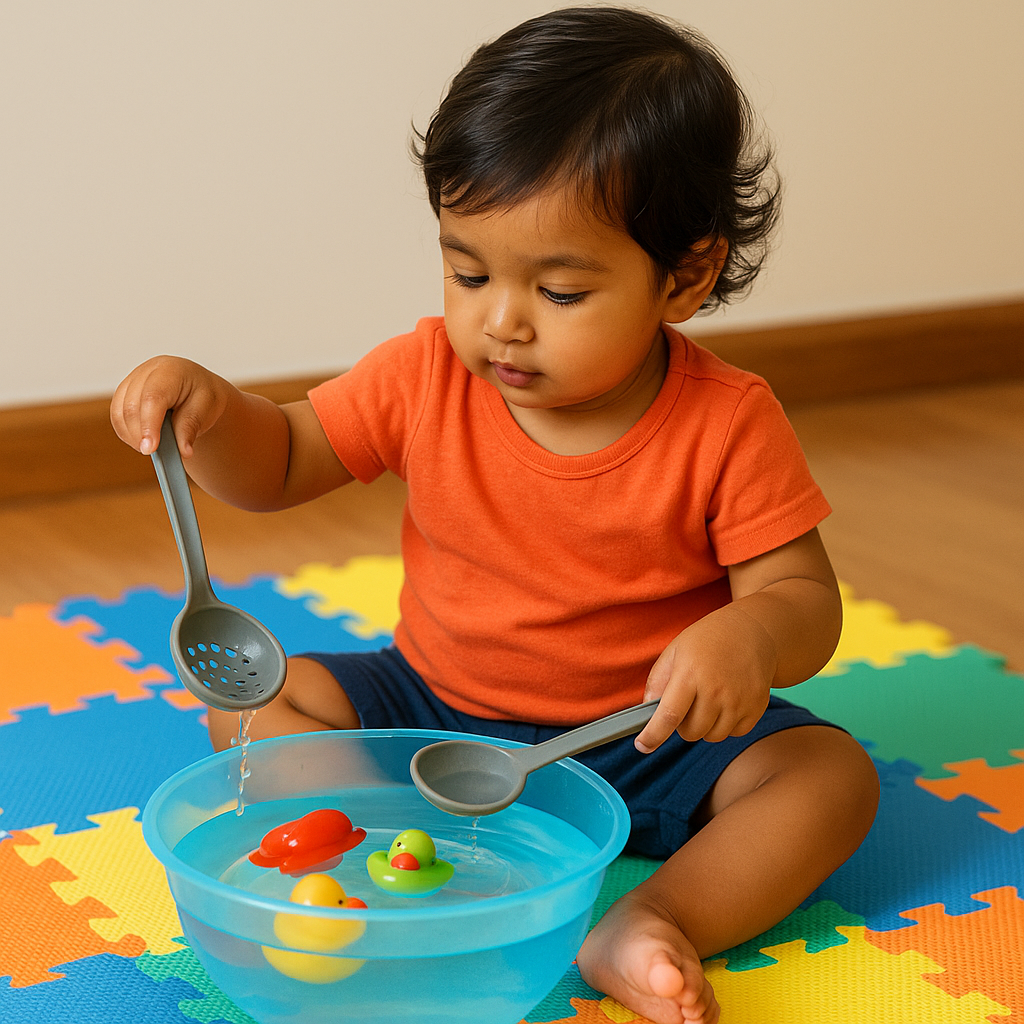
Developmental benefits:
- Hand-eye coordination
- Language
- Sensory calming
- Pre-math concepts like full/empty
2. DIY Obstacle Course
Create a simple obstacle course using cushions to crawl over, a small stool to climb, and chairs with a bedsheet draped over to crawl under. Narrate their actions to build language skills. You could also hide a toy inside for them to find.

Developmental benefits:
- Gross motor skills
- Balance and coordination
- Problem solving
3. Animal Movement Game: Pretend, Imitate, Connect
Pretend play starts budding around 18 months. This is a perfect age to introduce body-based pretend games. Name an animal and model its movement: hop like a bunny, flap like a bird, crawl like a bear, or tiptoe like a cat. Add animal sounds for more fun!
Your toddler may initially observe you, but they will eventually start imitating.
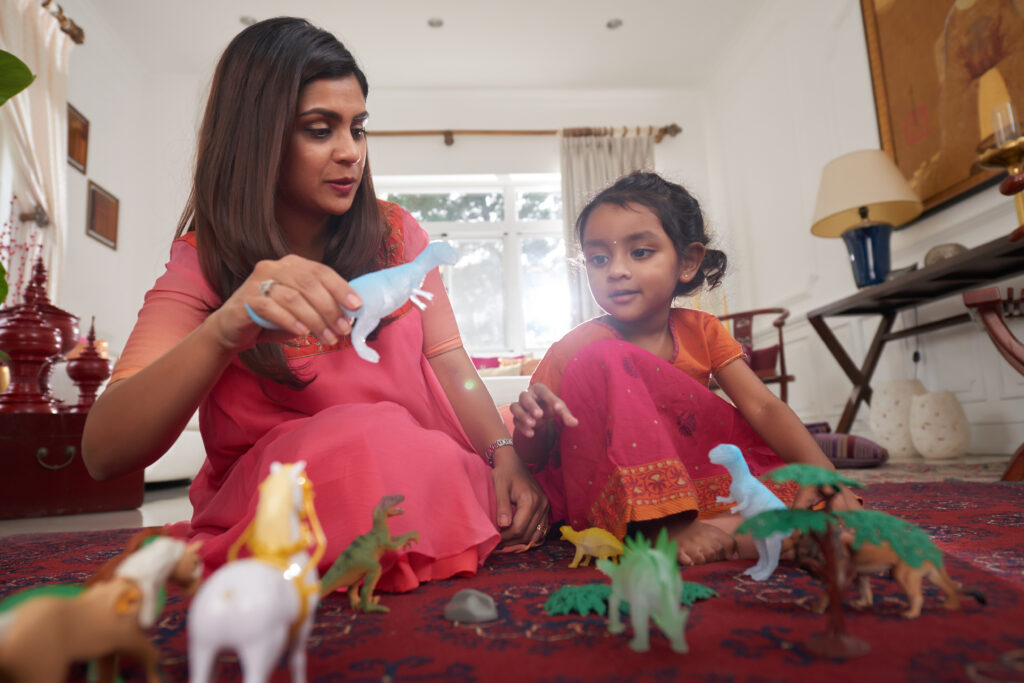
Developmental benefits:
- Body awareness
- Listening and language enrichment through action words
- Imitation
4. Stacking & Posting: Early Logic and Fine Motor Skills
Toddlers love stacking blocks, nesting bowls, and inserting objects into containers (known as “posting”). Set up a small table or mat with soft building blocks, large nesting cups or bowls and a box with a slot and some old cardboard pieces or tokens
Encourage them to explore freely or gently guide them by asking, “Can we make a tower?”, “Where does this go?”
Sorting by size, color, or shape can be introduced gradually over time.
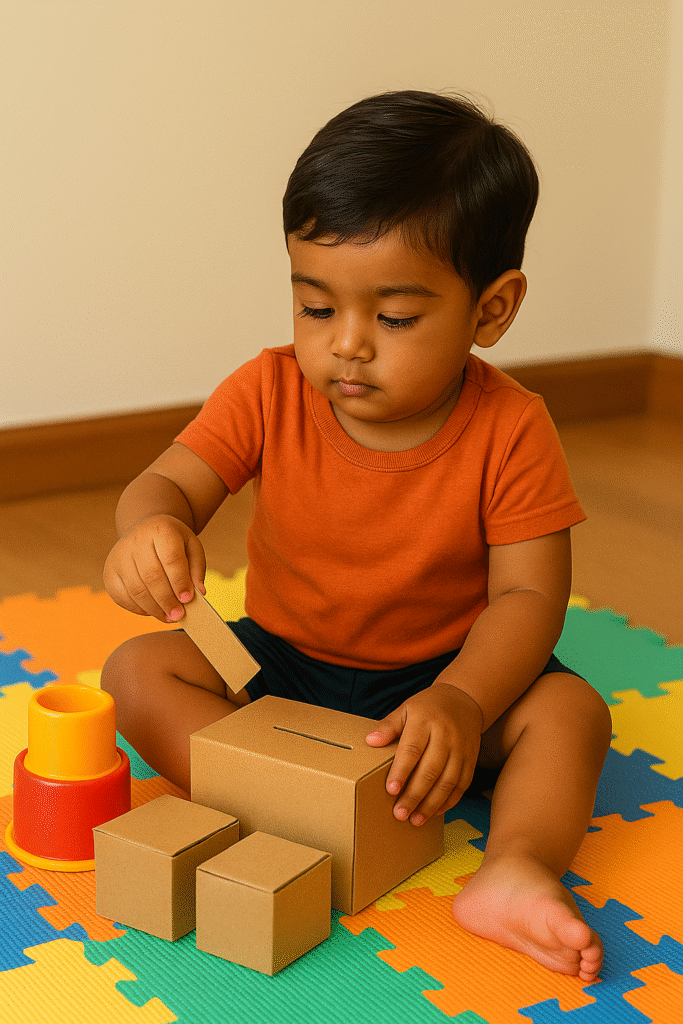
Developmental benefits:
- Early problem-solving
- Fine motor control
- Categorization and matching
- Focus and attention
You don’t need fancy toys or structured lessons to engage your toddler. What matters most is time, space, and your presence. These activities are not only screen-free but also promote independent play, curiosity, and a strong parent-child bond.
If you’re a parent who is finding it overwhelming to manage toddler energy indoors, it’s okay to start small. Choose one or two of the activities above and adapt them to your child’s interest.
Finally… it’s okay for children to be bored. Boredom often leads to imagination and creativity.Looking for more ideas on play and child development?
Get in touch here, or follow on Instagram @psykapoor for daily tips, expert advice, and simple activities that support your child’s growth.